Key takeaways
- Roof water should leave the foundation by many feet.
- Buried downspout lines beat splash blocks on flat or wet lots.
- Grading should slope away from the house.
- Catch basins and channel drains handle surface flow.
Start with the roof
A roof delivers a large volume of water in a storm. If it lands at the foundation, it soaks the soil and may reach the basement.
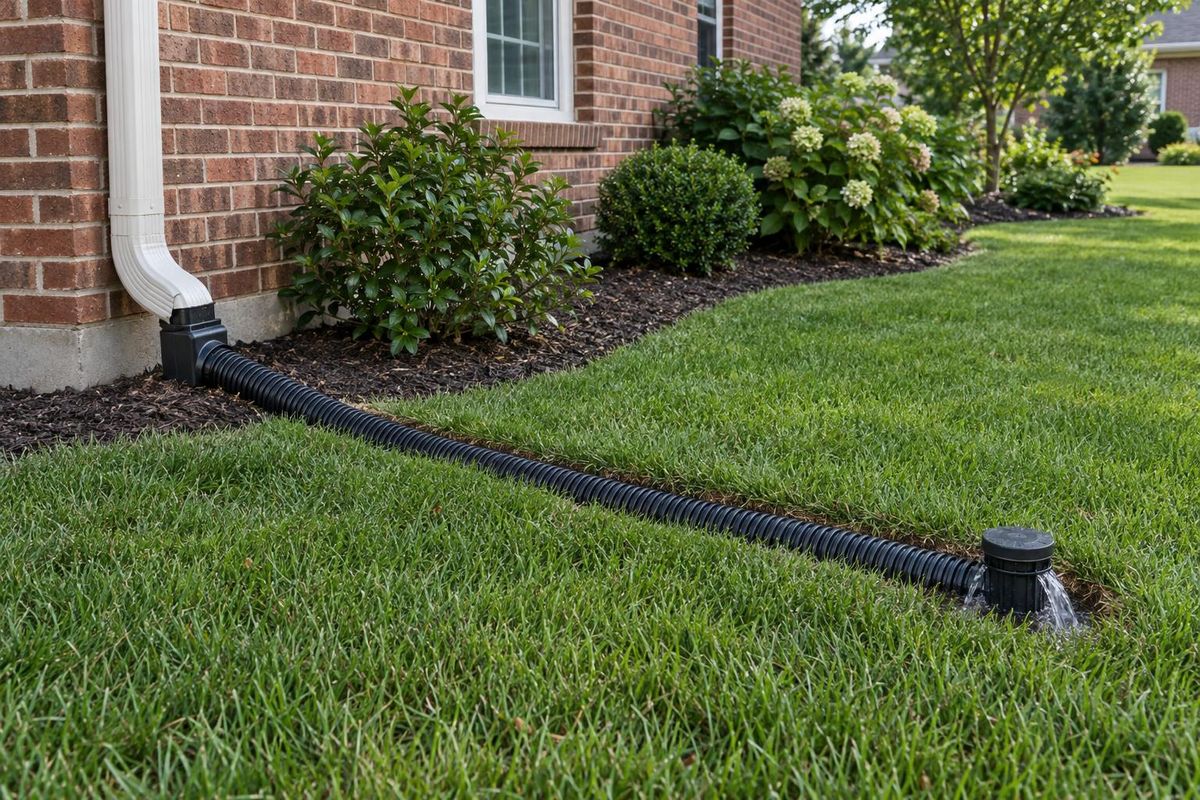
Extend or bury downspouts to carry water away.
Grade and swales
Soil should slope away from the house. Shallow swales guide surface water around structures and toward outlets.
Small grading changes make a big difference.
Drains and basins
Catch basins gather water at low spots. Channel drains protect doors and driveways. French drains collect groundwater.
Each handles a different kind of water.
Outlets
Water must end up somewhere safe: daylight, a pop-up emitter, a dry well or a storm connection where allowed. Never discharge toward a neighbor's yard.
Plan the outlet first.
Quick answers
How far from the house should downspouts discharge?
As far as the lot allows, commonly ten feet or more, downhill from the foundation.
Are splash blocks enough?
They help on gentle slopes, but heavy rain overwhelms them.
Can I connect downspouts to the sewer?
No. Rain water should not enter the sanitary sewer.