Key takeaways
- A septic system treats wastewater on your property.
- Regular pumping protects the drain field.
- Warning signs are slow drains, odors and wet ground over the field.
- Careful use extends the life of the system.
How it works
Wastewater flows into a tank where solids settle and scum floats. The clearer liquid flows to a drain field and soaks into the soil.
The soil does the final treatment.
Pumping
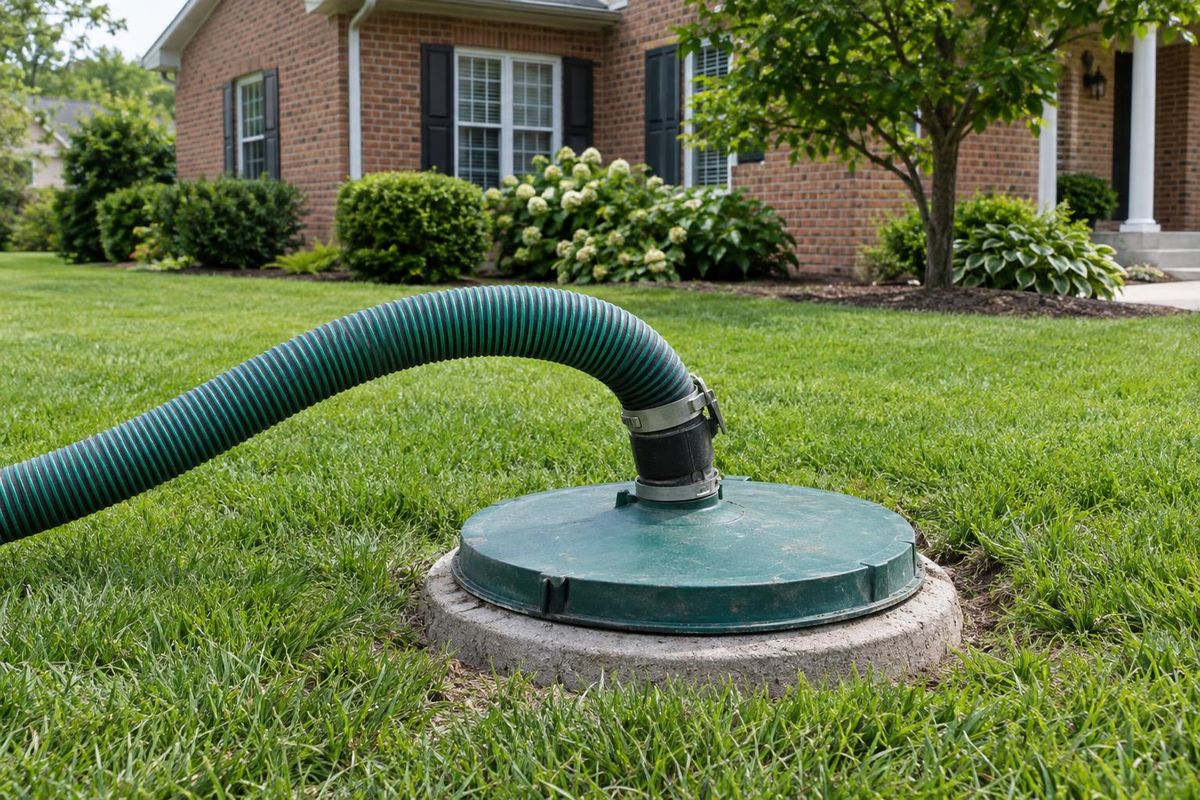
Sludge builds up in the tank and must be pumped out regularly. If it overflows to the field, it clogs the soil.
The right interval depends on tank size and household size.
Warning signs
Slow drains, gurgling, sewage odors, lush or wet spots over the field and backups mean the system needs attention.
Call before the problem spreads.
Everyday care
Spread out laundry, fix leaking fixtures, keep vehicles and trees off the field and avoid harsh chemicals and non-flushables.
Keep records of pumping and service.
Quick answers
How do I find my septic tank?
Look at the original plans or inspection records, or follow the main drain line from the house. We can help locate it.
Can I use bleach and cleaners?
Normal household use is fine in moderation. Large amounts of harsh chemicals can hurt the tank's bacteria.
When should I replace a drain field?
When it can no longer absorb water despite pumping and repairs, an inspection can tell you.