Key takeaways
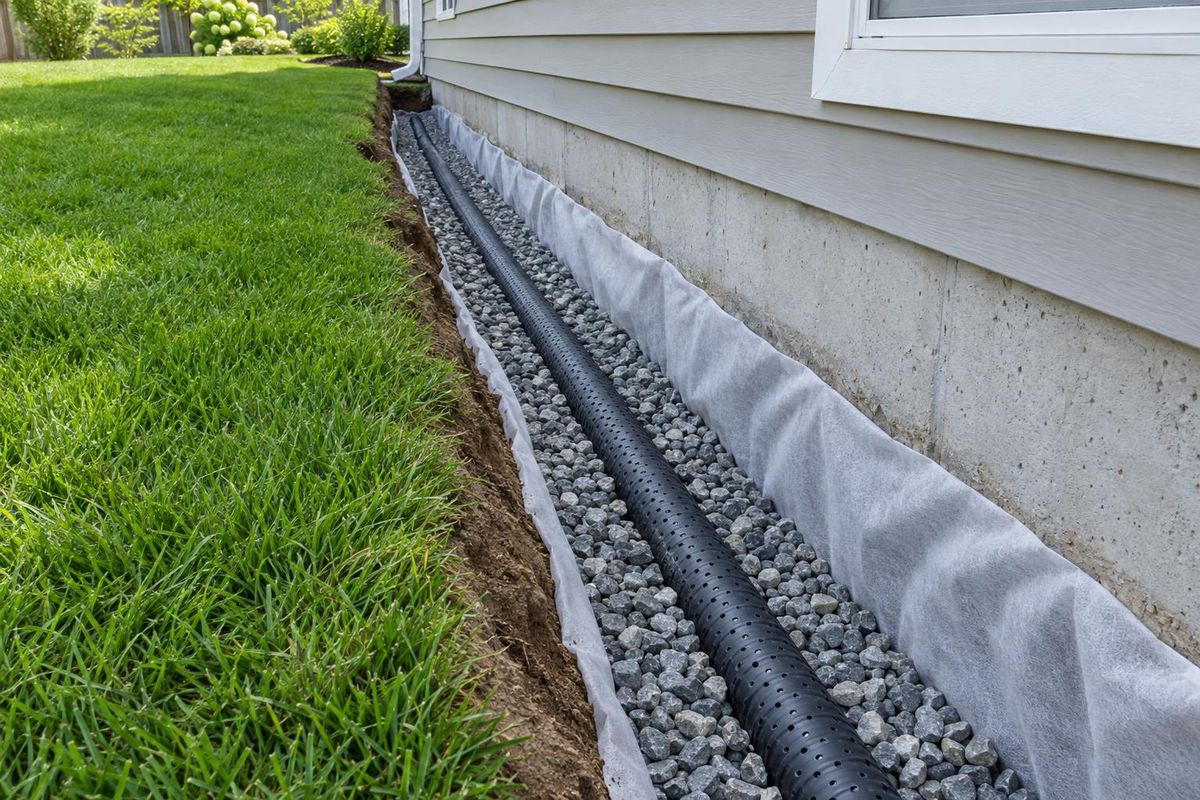
- A French drain is a gravel-filled trench with a perforated pipe.
- It collects groundwater and slow seepage.
- The outlet must be lower than the drain and lead somewhere safe.
- Surface runoff may need a swale, basin or channel drain too.
The basic idea
Water moves through soil to the gravel in the trench, enters the perforated pipe and flows downhill to an outlet. Fabric around the gravel keeps soil out.
The pipe sits on a steady slope.
When it helps
French drains solve soggy lawns, water along foundations and wet areas at the base of slopes. They work best where water is moving slowly through the soil.
They are less effective against heavy sheet flow across the surface.
Design details
Depth, slope, pipe type, gravel size and the outlet all matter. A drain without a proper outlet just moves the puddle.
Sloping the pipe at least a small amount is essential.
Other tools
Catch basins, channel drains, swales and downspout lines handle surface water. Many yards combine several.
A site walk shows the right mix.
Quick answers
How deep is a French drain?
It depends on the site, often a foot or two deep for yard drains and deeper for foundation drains.
Will a French drain clog?
Fabric, clean gravel and a good design keep it working for many years.
Can I build one myself?
Small ones are possible, but slope and outlet design are easy to get wrong.